Tel: +86-21-60530355
Mobile: +8615214379688
E-mail: sales@beallindustry.com
Address: No.1088 XinJinQiao Road, PuDong, Shanghai, China


The Best Fastener Manufacture
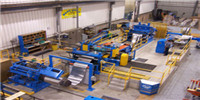
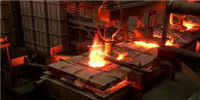
Beall Industry Group Co., Limited is the leading manufacturer and supplier of stainless steel, duplex stainless and super nickle alloy materials with more than 25 years experience of supplying to a great variety of end users from different fields. Beall Industry Group, establlished in 1992, now covers a total landing area 520,000 square meters and nearly 500 employees.
Quality control
In the processing of production, our professional technical engineers inspect the processing to ensure the quality of products,After our machine finish , our engineer will make 24 hours test constantly and ensure the machine reach to the best performance.
One-stop Solution
With rich experience and one-to-one service,we can help you choose products and answer technical questions.
Make it personal
When you work with us, you can count on personalized, one-on-one service every step of the way.
World-wide expertise
We know international markets and trends. Our expertise, experience and network cover all corners of the world.
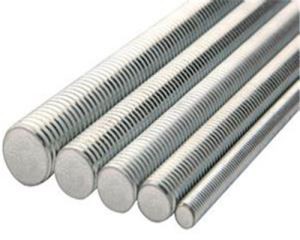
A fastener is a mechanical tool used to connect or attach two surfaces or objects together, either permanently or non-permanently. Non-permanent fasteners can be easily removed without damaging the materials they join. In contrast, removing permanent fasteners often requires significant force and may cause damage to the connected surfaces. Permanent fasteners are designed to provide a long-lasting, secure connection.
Secure connections
Fasteners form strong and solid connections between various materials or pieces, ensuring that they remain in place and can endure applied stresses and vibrations.
01
Easy assembly and disassembly
Fasteners make component assembly and disassembly simple and convenient. This is especially useful during manufacture, maintenance, and repairs, as well as when temporary connections are necessary.
02
Versatility
Fasteners are available in a variety of shapes, sizes, and materials, making them appropriate for a wide range of applications in a variety of sectors.
03
Cost-effective
Fasteners are often less expensive than more sophisticated and time-consuming techniques of attaching materials, such as welding or adhesives.
04
Flexibility
Fasteners can handle materials of various thicknesses and forms, providing for design and construction flexibility.
05
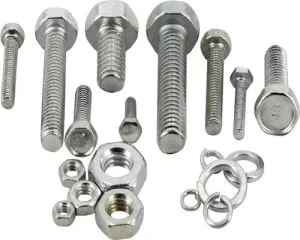
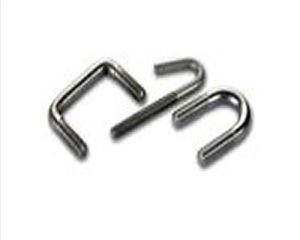
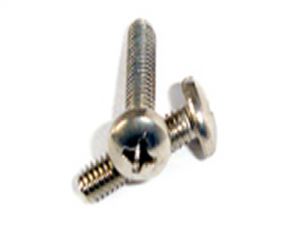
Bolt
A bolt is a type of fastener consisting of a head and a screw (a cylinder with external threads). It should be fitted with a nut for fastening and connecting two parts with a through-the-hole. This form of connection is called bolt connection. If the nut is removed from the bolt, the two parts can be separated, so the bolt connection is a detachable connection.
Stud
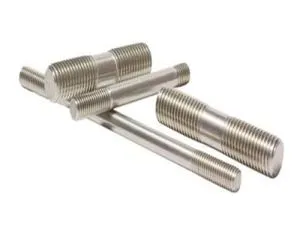
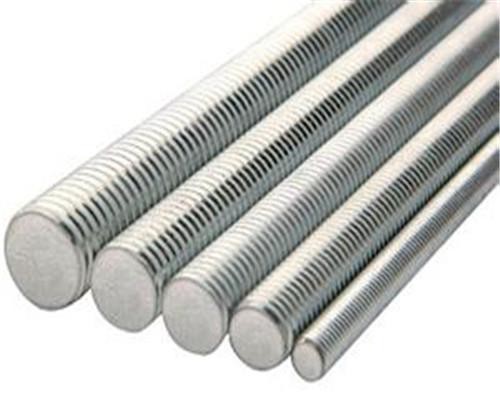
Stud, also known as threaded rod or threaded bar, is a kind of fastener with no head and only two ends with external threads. When a stud is used to make a connection, one end of it must be screwed into the part with an internally threaded hole, the other end must go through the part with a through the hole, and then the nut is screwed on so that the two parts can be fastened together into one piece. This form of connection is called a stud connection, which is also a detachable connection. Stud connection is mainly used in the following occasions: One of the connected parts is thick, requires a compact structure, or due to frequent disassembly, should not be bolted connection.
Screw
The screw is also a kind of fastener composed of two parts: Head and screw. According to the purpose, it can be divided into three categories: Machine screw, set screw, and special purpose screw. Machine screws are mainly used for a tight connection between a part with a tight threaded hole and a part with a through hole, without a nut fit. This connection form is called a screw connection, and also belongs to the detachable connection. It can also be fitted with a nut for a tight connection between two parts with a through hole. The set screw is mainly used to fix the relative position between two parts. Special-purpose screws such as lifting ring screws are used for lifting parts.
Nut
Nuts are fasteners with internally threaded holes, whose shapes are generally shown as a flat hexagon column, flat square column, or flat cylindrical fasteners. A nut with a bolt, stud, or machine screw is used to fasten two parts together into a whole.
As a professional fastener manufacturer, we offer different types of nuts, especially high-quality tee nuts.
Tapping screw
Tapping screws are similar to machine screws, but the threads on the screw of the tapping screw are for special tapping screw threads. Self-tapping screws are used to fasten and connect two thin metal components so that they become whole. The holes need to be made in advance on the components. Because of the high hardness of this screw, it can be directly screwed into the holes of the components, so that the internal threads in the component are formed in response.
Wood screw
Wood screws are also similar to machine screws, but the threads on the screw are specialized for wood screws. Wood screws can be screwed directly into a wood member (or part) and used to fasten a metal (or nonmetal) part with a through-hole to a wood member. This connection is also a removable connection.
Washer
The washer is a kind of fastener with an oblate annular shape. It is placed between the supporting surface of bolts, screws, or nuts and the connecting parts’ surface, playing a role in increasing the contact surface area of the connected parts, reducing the pressure per unit area, and protecting the surface of the connected parts from being damaged. Another type of elastic washer can also play a role in preventing the nut to loosen.
Retaining ring
The retaining ring is installed in the shaft groove or hole groove of steel structure and equipment, which plays the role of preventing the parts on the shaft or hole from moving around.
Pin
Pins are mainly used for positioning parts, and some can also be used for connecting parts, fixing parts, transferring power, or locking other fasteners.
Rivet
A rivet is a kind of fastener composed of two parts: The head and the nail rod. It is used to fasten the parts (or components) connecting two through holes to make it into a whole. This form of connection is called rivet connection, or riveting for short. Belongs to the non-removable connection. Because to separate the two parts that are joined together, you have to break the rivets on the parts.
Assemblies and connection pairs
Assembly is a kind of fastener that is supplied in combination, such as a certain machine screw (or bolt, self-supplied screw) and a flat washer (or spring washer, lock washer). Coupling pair refers to a class of fasteners that are supplied in combination with a special bolt, nut, and washer, such as high-strength large hexagon head bolt coupling pair for steel structures.
Welding nut
Welding studs belong to a fastener with high strength stiffness connection. Welding studs are short for Cheese head studs for arc stud welding.
The welding stud is a special fastener composed of a smooth rod and a nail head (or no nail head). Generally, it is required to be fixed and connected to a part (or component) by welding so that it can be connected with other parts.
Know the Application
The types of fasteners you use will always depend on the requirements of your application. You have to consider if your fastener will fit. The design of the fastener can be vital in knowing the amount of torque it can take. You may need a very long flange bolt to hold several components of your parts.
You need to consider leaving some threads of the fastener out. This is to ensure the safety of the material and personnel.you may find more than one type of fastener working. In that case, you need to seek the experience of experts to decide the right one for the work.
Select the Right Thread
Thread selection is another important factor when choosing a fastener. Threads are crucial parts of an application. They may be fine (UNF), coarse (UNC), or eight-thread.
Coarse threads ensure the quicker assembly of components.fine threads may take longer to assemble. This is due to the number of revolutions they need to travel the distance.
The advantage of fine over coarse threads is that they offer better thread engagement. They also ensure a more secure connection for accommodating greater tension in the connection. Regardless of your option, either can be very beneficial. All you need to do is choose the thread to offer the best load-handling capabilities.
Consider the Materials of Construction
Several different materials are used in making mechanical fasteners. The most used material is carbon steel. This is due to its wide range of strength and workability properties. Other materials include alloy steel and stainless steel. Alloy steel bolts don’t usually come plated.
They are very strong but quite brittle.stainless steel can have specific properties for special use. They are perfect in high moisture areas, e.g., water plants. They are also good for use in areas where there may be chemical exposure. Bronze, brass, and aluminum are also used occasionally. They are highly corrosion resistant.
Type of Exposure for the Fastener
You must also consider the temperature you will expose the fastener to before selection. Extreme temperature changes can lead to the expansion and contraction of fastened joints. This can lead to a loose connection. Hence, the need for a fastener that can meet the temperature requirements. The level of vibration is another important consideration. A prevailing torque locknut may be the right option in areas of high vibrations. This will prevent the fasteners from loose vibration.
The drive type – Driving the fastener into place may require a special tool or device. Drive types include tools like Phillips (screws), Hex Socket (nuts), Square, (screws or nuts), and Star (special threaded fasteners).
The head style – Describes the head of the fastener that can be flat, round, pan, hex, or oval types. Selecting a head type depends on the type of finish you want for your product or assembly.
The material – Material is one of the most important considerations when choosing a threaded fastener. As the material determines the overall joint strength, you should ensure you choose a threaded fastener that comes with adequate tensile strength as part of its properties.
The measurement – Each threaded fastener will also have a measurement stamped on the product to guide you. It includes the diameter, thread count, and length.
Connecting Structural Components: Bolts and nuts are commonly used to join beams, columns, and other structural members. Screws are typically used in wood construction to fasten panels, frames, and other components.
Securing Building Envelopes: Used to attach siding, roofing structures, and sheathing to the building’s exterior.
Concrete Construction: Anchor bolts are embedded in concrete to secure structures like columns or equipment to the foundation.
Electrical and Mechanical Systems: Screws and nuts are the go-to for securing electrical boxes, conduits, and mechanical equipment. Bolts and Anchors are preferred for attaching heavy machinery or equipment to floors or walls.
Interior Finishing: For attaching drywall, trim, and other interior finishing materials. Anchors are used to secure items to walls, such as shelves or cabinets.
Woodworking: Used in the assembly of wooden structures and furniture.
Temporary Structures: Fasteners like bolts and nuts are a great choice for the construction of temporary structures, such as scaffolding.
Roofing: For securing shingles or other roofing materials to the roof deck.
Select the right fasteners: Make sure the fasteners you use are suitable for the job at hand, taking into account things like load capacity, material compatibility, corrosion resistance, and environmental conditions. To choose the right fasteners for your purposes, consult industry standards, regulations, and engineering specifications.
Follow manufacturer instructions: The manufacturer will provide particular installation instructions for each type of fastener. To guarantee correct installation and performance, carefully read and adhere to these directions. Manufacturers frequently list the suggested tools, torque standards, and methods that should be used for the best results.
Prepare the installation area: Make sure the installation area is tidy, clear of obstructions, and suitably prepared before attaching fasteners. Remove any corrosion, impurities, or coatings that may prevent the fastener from firmly gripping the material.
Apply appropriate torque: Applying torque properly is essential for fastener performance. Overtightening can result in fastener failure, material deformation, or damage, while under-tightening can result in loose connections. To obtain the appropriate tightness, use a calibrated torque wrench and adhere to the manufacturer's suggested torque values.
Consider preload and tension: Applying preload and tension is crucial in situations where fasteners are subjected to dynamic loads or vibrations. Preload is the initial force put on the fastener to keep it secure when under different loads. The necessary preload can be achieved via methods like torque-angle tightening or measuring bolt stretch.
Use appropriate fastener-locking methods: Consider employing locking devices like thread-locking adhesives, lock washers, or prevailing torque nuts to stop fasteners from losing over time due to vibrations or other external forces. These techniques can aid in keeping the connection's integrity.
Regular inspection and maintenance: To find any indications of fastener deterioration, corrosion, or loosening, routine inspections are required. Create a maintenance program to inspect and tighten fasteners as necessary. To keep the system's integrity, replace damaged or worn fasteners right away.
Consider environmental factors: Fasteners can be affected differently by different conditions. The performance of fasteners may be impacted by components including temperature changes, moisture exposure, chemical exposure, or other corrosive substances. Pick fasteners made of the proper materials or coatings to offer resistance to these environmental variables.
Training and expertise: Make sure that anyone working on installing or maintaining fasteners has the right training and knowledge. Achieving consistent and dependable results requires a thorough understanding of the underlying concepts behind fastener installation, torque application, and maintenance procedures.
Documentation and record-keeping: Keep thorough records of all fastener installation, torque measurement, inspection, and maintenance procedures. Fastener history can be tracked using this paperwork, which also helps spot any patterns or problems and ensures accountability.
Beall Industry Group, who is famous for the material smelting and processing services in China stainless steel industry now have 3 plants locate in Jiangsu Province and Zhejiang Province, one domestic sales center in Jiangsu and one international sales office in Shanghai.