



Tel: +86-21-60530355
Mobile: +8615214379688
E-mail: sales@beallindustry.com
Address: No.1088 XinJinQiao Road, PuDong, Shanghai, China


Corrosion resistance is the primary performance of stainless steel and stainless steel pipe area different from other steel grades and ordinary steel pipes. The corrosion resistance of stainless steel depends on its chemical composition, surface state and environmental conditions. In specific application conditions, i.e. after the steel grades and environmental conditions are determined, the premise to ensure the corrosion resistance is to form a uniform and dense passivation film on a clean and smooth surface, and the local damage of the passivation film is the root cause of local corrosion.
Formation characteristics of passivation film: the passivation film formed on the surface of stainless steel at room temperature is not a "true" oxide film, its physical and chemical structure has not been fully confirmed so far, and it is commonly known as a complex oxide or hydrogen oxide film. The passivation film formed spontaneously on the surface of pure stainless steel in atmosphere or other oxygen containing environment and has self-healing characteristics. Room temperature, purification and aerobic environment are three important concepts or elements of passive film formation. Stainless steel pipes and all stainless steel products are delivered with great emphasis on purification or passivation treatment, in order to make their surfaces generate purification film, so as to ensure their corrosion resistance.
Fouling and damage of passivation film: the blunt surface of stainless steel pipe is actually a very thin passivation film with a thickness of only 1-3 nm, and its local pollution and damage are the basic inducement of stainless steel corrosion.
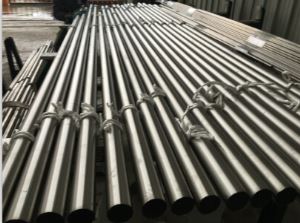
Protection of passivation film: during the manufacturing, storage, transportation and use of stainless steel pipes, especially in the process of reprocessing, great attention must be paid to the protection of surface passivation film, and strict precautions shall be taken for collision, carbon steel binding or sling, forklift bracket contact, local storage, sewage soaking, etc.
Before delivery, stainless steel pipes must be cleaned by special processes such as acid pickling for descaling, passivation or electropolishing to remove oxide skin, iron ions and other foreign matters on the surface to obtain a blunt surface. The chemical inert and blunt surface formed naturally on the surface of clean stainless steel pipe in air or other oxygen containing environment is the fundamental guarantee of corrosion resistance of stainless steel pipe.